Whoops, forgot to post this yesterday
As the end of the semester is here, and I’m finishing up, printing off, and ready to hand in, and with no work to do between ending now and starting in the new year, I’m going to... Have some work to do over the Christmas holiday!
As in semester 2, I intend to do much more detailed level designs (Very much nit eh style of the Game Design Documents we would produce in second and third year, as opposed to the pitch style levels I have done thus far) I will be deciding upon 10 mechanics in which to base these levels.
This is mainly as I have had such trouble this semester picking IP’s, I felt if I prepare in advanced, I’ll be able to both work through them quickly AND mean I won’t waste time deciding on mechanics and settings.
Here are a few things, upon looking back, I did wrong!
1) Too much pottering about.
It seems all my levels are a series of rooms, and all with very similar game play. While I intend to focus on mechanic based design, I’m going to be absolutely sure not to do any level that is set in a house!
2) small levels, with similar genres and aimed at a low target audience.
At the very least, I’d like to try a racing track level or a first person shooter.
3) all single player. (Stop doing single player!)
Something I didn’t notice till yesterday, all of my levels are for one person. Reams of problems I’d have to deail with rear their ugly head when I think about co-op, keeping the player together (or apart) or even competitive enviroments!
So, this is probably my last ‘diary’ for this submission! The next one will beginning of my next reflective diary, probably detailing my mechanics and stuff!
See you then, and happy grading!

Showing posts with label Semester 1. Show all posts
Showing posts with label Semester 1. Show all posts
Friday, 10 December 2010

Tuesday, 7 December 2010
Squeezing one more out! Multiplayer test.
Pant.. huff.. wheeze...
Running quickly out of time, and I was determine to do a 10th level design, and insistent that it would be multiplayer, so that I could push myself before the turd hits the turbine in the new year.
Being multiplayer, using an IP seemed a little forced, so in this instance I have abandoned my own brief, in favour of freedom in design.
Running quickly out of time, and I was determine to do a 10th level design, and insistent that it would be multiplayer, so that I could push myself before the turd hits the turbine in the new year.
Being multiplayer, using an IP seemed a little forced, so in this instance I have abandoned my own brief, in favour of freedom in design.
Here are the result.


Don't worry, my work next semester will be a little.. better thought out.
Don't worry, my work next semester will be a little.. better thought out.
My main problems here are the lack of IP, missing my own brief a little, but overall, it continued to be a very positive learning experience, the length, the design aesthetic (or lack their of.) and of course, the quality.
Its also very cluttered and messy. But I have moved more towards demonstrating the game play than writing about it, so I feel I am more than prepared for the next semester!
In the way of multiplayer design, I now realise if it where a co-op game, it is about overcoming obstacles together, being able to help each other in a dire situation, and adding just the right amount of danger to keep the team on their toes.
Thursday, 2 December 2010
In the Night Kitchen
First thing first, I have something I need to admit to. When designing this level, I committed the game design sin of creating a game. Earlier in this blog, I spoke about the low quality of lisenced games not sticking particularly well to the source material.
This is because, while the basis is fairly interesting, it did not fit particularly well to gameplay, but I decided to tackle it anyway.
I now understand this low quality foun
d in some games, but that’s not what I’m here for!
By this point I should probably mention the source material in question is “In the Night Kitchen’ by Maurice Sendak
With my level design, both the presentation and the game play are fairly weak (a few simple challenges based on the books narrative) however, like my “The Flash” level design, I have continued doing something important. This is the mention of mechanics within the document.
So while I’m not happy with the level, I have again continued to develop!
Congratulations me!
And here it is.
This is because, while the basis is fairly interesting, it did not fit particularly well to gameplay, but I decided to tackle it anyway.
I now understand this low quality foun
d in some games, but that’s not what I’m here for!
By this point I should probably mention the source material in question is “In the Night Kitchen’ by Maurice Sendak
With my level design, both the presentation and the game play are fairly weak (a few simple challenges based on the books narrative) however, like my “The Flash” level design, I have continued doing something important. This is the mention of mechanics within the document.
So while I’m not happy with the level, I have again continued to develop!
Congratulations me!
And here it is.

If I don't mention it later, I need to do more platform levels next time! Like Batfink!
Wednesday, 24 November 2010
A Good IP VS a Bad IP
For reasons I have not yet mentioned, I have rejected quite a few intellectual properties to use as part of the project through the course of the semester.
But why? I know I went into this slightly when I spoke about the process of my design, but I will go into more specifics here.
But why? I know I went into this slightly when I spoke about the process of my design, but I will go into more specifics here.
I couldn’t find any good source material
The first issue, and one that almost threatened to end my going forward of the two Dr. Seuss levels is that I can’t locate anything to learn about it.
I was fortunate that my first level, Batfink, had several videos available on YouTube, and for some of them, such as the gingerbread man, I knew of already and used online sources to refresh my memory.
It doesn’t make a good game
The most important element to make me disregard a level is if it doesn’t make a good game.
This is what is currently threatening ‘Spot The Dog’, as a level design for this consists of a very simple hide and seek game.
The mechanics aren’t obvious
While I spend a lot of time looking for a mechanic to make the game work, sometimes there just isn’t anything that will turn the medium I’m working with into a workable game.
An example of this would be if I were to try to base a game on Eastenders. Apart from chit-chatting, threes not a lot of scope for a game.
Its not particularly unique or exciting
A problem I’ve noticed, and have now been avoiding, is that several of my levels began to become very similar, or be identical to pre-existing games.
If something is not very interesting, It will go straight on the scrap heap.
I don’t like it
Ok, so it’s not a good reason, or even very mature, but if I find that the IP is not something I want to work on, I won’t.
Obviously, this is a practice that won’t join me in the games industry (and part of the reason I’m using IP’s is to work on other peoples projects.) but for now, I am happy to be a little self indulgent and ignore IP’s I dislike.
You’ll notice these are all reasons for rejection, this is because I have a long list of IP’s, and am forever discovering more with potential, and this process is more about weeding out the turds than it is finding the perfect IP.
Monday, 22 November 2010
Context innapropriote
Through these levels, I have tried to make each as relevant to its IP as possible.
Upon completion of my “The Flash” Level design, I realised I had failed quite completely at this in this instance.
Looking back over the source material, it is often the character will be located outside, in some kind of warehouse, or a villains base.
Instead, I went for a trap laid in a local community centre type thing. Go me!
While this isn’t completely off the mark, I feel I could have done a lot better job with this.
Also, I feel the map is too small to see properly, however, if I where to put it on its own page, it would be too spacious.
One important thing to note is that I am learning! This document contained a lot of examples of what happens in the level, specifically the boss fight.
This process of demonstrating an event is what I hope to be doing next semester, so I at least learnt from my mistake!
Ah well, maybe next time?
Untill then, enjoy my failure!
Upon completion of my “The Flash” Level design, I realised I had failed quite completely at this in this instance.
Looking back over the source material, it is often the character will be located outside, in some kind of warehouse, or a villains base.
Instead, I went for a trap laid in a local community centre type thing. Go me!
While this isn’t completely off the mark, I feel I could have done a lot better job with this.
Also, I feel the map is too small to see properly, however, if I where to put it on its own page, it would be too spacious.
One important thing to note is that I am learning! This document contained a lot of examples of what happens in the level, specifically the boss fight.
This process of demonstrating an event is what I hope to be doing next semester, so I at least learnt from my mistake!
Ah well, maybe next time?
Untill then, enjoy my failure!

Sunday, 21 November 2010
Too rough to be work?
Through the semester, my process (as explained previously) has begun with scrawling notes and doodles of how a game might work, a level might play out, or the mechanics that might be used.
Now, with 2-3 weeks to go, I’ve been thinking about my submission, and what exactly should be fed to the Grade Monster.
While the doodles and notes may be readable to me, and helpful, they are in no way representative of what should be produced in the industry in the way of pre-production documentation.
Ok, so it’s just brainstorming, but is this important enough to show? A lot of my work beyond this is done on computer and is cleaned up and presented, leaving no trace of the process, but ultimately resembles the doodles to begin with.
The important part is that it helps me, and while it may be complete crap to someone else, until I move into the second and third semester, at which point I’ll be working with the aim of industry standard practice, I shouldn’t be penalised for demonstrating in my submission the idea generation process.
So, Grade Monster, if you are reading this, and you have seen a book full of writing and horrid drawings, and wondered why my developmental work is so poor... It’s because it isn’t developmental work, per say, but instead the canvas for my idea paintbrush.
I would have included an example of my super rough work, however I do not have acsess to a scanner! If you are grading this, I'm sure my book will be provided along with the print outs of this blog!
Now, with 2-3 weeks to go, I’ve been thinking about my submission, and what exactly should be fed to the Grade Monster.
While the doodles and notes may be readable to me, and helpful, they are in no way representative of what should be produced in the industry in the way of pre-production documentation.
Ok, so it’s just brainstorming, but is this important enough to show? A lot of my work beyond this is done on computer and is cleaned up and presented, leaving no trace of the process, but ultimately resembles the doodles to begin with.
The important part is that it helps me, and while it may be complete crap to someone else, until I move into the second and third semester, at which point I’ll be working with the aim of industry standard practice, I shouldn’t be penalised for demonstrating in my submission the idea generation process.
So, Grade Monster, if you are reading this, and you have seen a book full of writing and horrid drawings, and wondered why my developmental work is so poor... It’s because it isn’t developmental work, per say, but instead the canvas for my idea paintbrush.
I would have included an example of my super rough work, however I do not have acsess to a scanner! If you are grading this, I'm sure my book will be provided along with the print outs of this blog!
Saturday, 20 November 2010
Emrgenct Gameplay 2 - Creating a game within a game
Carrying on from my last post, I have explored the various ‘mechanics’ available in ‘habbo hotel’, and had a stab at creating a game within the game.
First, some background information!
The primary ‘mechanics’ (I promise to stop putting these in inverted commas soon) of the game are to move a character around 4 directions on an isometric grid, chat to other players, and stand in the way of other players, and also dress your player.
As well as this, there are items that can be sat on, laid on, or dispense ‘food’ items for your character to hold. All items can be moved (or rotated) by a user granted ‘rights’ in a room (these users can also eject people from the room) and there are also various items that do specific thing such as:
- A Roller which, when something is placed on it, will move the item to the next tile
- A Dice, which show a random number between 1 and 6
- Various divider and gate items used to separate rooms.
Now, what promoted this was a series of items within the game that would cause various effects within these mechanics without a user doing it manually, and it could be triggered in different ways.
As I mentioned previously, users had created games in which people race to appearing furniture, which a user would have to move. This sort of thing can now be done by a simple triggered effect.
Now, for the exciting bit. What I did!
What I’ve done
Using several “Roller” items and the ability to trigger rotation, I set up a small track network that, at points, would split off in different directions.

The idea of the game was for 2 people to compete in getting items that where placed on the start of the track to end up in their area when it came off the track.
Players could rotate 3 of the rollers to change to 4 directions, 1 direction facing their goal, one and the other 3 leading back to the start.
The challenge arises when the players can each rotate the same spots, so would compete to get these items to go their way, and if it didn’t, could try again at a later point.
But that’s not enough of a challenge!
To make it so players couldn’t play tug-of-switch, I set up a system in which several items would be on the track at once, so players couldn’t maintain focus on one rotator.
Why it couldn’t be done before
Obviously my excitement about emergent gameplay comes from the release of the mechanic creating items “Wired Furniture”

To better explain why this couldn’t have been made before, and why such tools are useful, I will explain why I was unable to do this before.
- Rotating items could only be done by people with ‘rights’ to move things.
With this, the users could move and rotate any item, so the limit to 3 items this game requires would not have been possible, and players could have moved anything anywhere. - A system with which players could operate items with a trigger was unavalible. would have been done by clicking the item and clicking “Rotate.” This would have been too time consuming.
- The process of putting objects onto the conveyer belt would have had to be done by hand, so the game would require a ‘host’
It would also not be particularly precise, and could be done as and when the host felt like it, perhaps even forgotten about.
Not bad for a few moving objects and 3 rotators on an online chat board, hu? I realise the design above looks a little shabby, but it is to give you an idea of how it works. A formalised document will likely be delivered with my submission.
Thursday, 18 November 2010
Emergent Gameplay
Over the past few days, I have come across an interesting concept in my free time that I’d like to talk about here. Emergent Gamepaly.
This is the practice of, within a set of pre-existing mechanics, creating a new way to play a game with a different set of rules than those provided.
While user created game play is something I found to be of low quality in my contextual review, the scope is still very broad.
Take children on a playground for example. Games I played in my childhood like Tag, Cops and Robbers and stuck in the mud where all games made up that simply used people as the players.
Add a ball to the mix, and you get catch and doge ball.
Add the ability to create markings, and this can become almost any sport.
These are all ideas I have thought of from the top of my head, but in terms of depth, yuo can see how adding simple tools can add infinite ways to play, and this is something I feel games designers could embrace.
Current application within games
2 examples I have found that had taken steps to incorporate this are Runescape, a fantasy MMORPG by Jagex, and Habbo Hotel, by Sulake is an avatar based chat game set in various use created ‘rooms’ that originated in Finland.
This year, both have added tools to help automate, streamline, or give additional options to players who set up community based game play outside the core content of the game.
Jagex, for instance, created tools that would simply make games fair, such as dice that all players could see, race markers, voting systems and the such, meaning that everything could be done in an orderly fashion.
Habbo Hotel on the other hand already had numerous games ran by users, with the primary mechanics available being the ability to move in 4 directions, and for various items of furniture to move and be interacted with (sat on, or changed state) and a large amount of games had been created as simple variations on one person moving items and players having to avoid or get to them in some form.
But within the last week or so, a series of items have been released, the “Wired Furniture” which allows users to create automated processes, with the basic formula of Trigger (+ condition) = Effect users can combine the various triggers and effects to create rooms that move on their own, items that respond to touch, and even the ability to use passwords.
I will talk about this more in my next post, and I hope to bring a unique style of game play to the table. (You’ll have to believe its unique, unless you have experience with the community!)
What is it?
This is the practice of, within a set of pre-existing mechanics, creating a new way to play a game with a different set of rules than those provided.
While user created game play is something I found to be of low quality in my contextual review, the scope is still very broad.
An example
Take children on a playground for example. Games I played in my childhood like Tag, Cops and Robbers and stuck in the mud where all games made up that simply used people as the players.
Add a ball to the mix, and you get catch and doge ball.
Add the ability to create markings, and this can become almost any sport.
These are all ideas I have thought of from the top of my head, but in terms of depth, yuo can see how adding simple tools can add infinite ways to play, and this is something I feel games designers could embrace.
Current application within games
2 examples I have found that had taken steps to incorporate this are Runescape, a fantasy MMORPG by Jagex, and Habbo Hotel, by Sulake is an avatar based chat game set in various use created ‘rooms’ that originated in Finland.
This year, both have added tools to help automate, streamline, or give additional options to players who set up community based game play outside the core content of the game.
Jagex, for instance, created tools that would simply make games fair, such as dice that all players could see, race markers, voting systems and the such, meaning that everything could be done in an orderly fashion.

Habbo Hotel on the other hand already had numerous games ran by users, with the primary mechanics available being the ability to move in 4 directions, and for various items of furniture to move and be interacted with (sat on, or changed state) and a large amount of games had been created as simple variations on one person moving items and players having to avoid or get to them in some form.
But within the last week or so, a series of items have been released, the “Wired Furniture” which allows users to create automated processes, with the basic formula of Trigger (+ condition) = Effect users can combine the various triggers and effects to create rooms that move on their own, items that respond to touch, and even the ability to use passwords.
I will talk about this more in my next post, and I hope to bring a unique style of game play to the table. (You’ll have to believe its unique, unless you have experience with the community!)

In closing
To close off, I should say this is something I am particularly interested in, as somebody who, when I was young, would roam around off course in Mario Kart, and give voices to the racers as if they where toys, finding ways to squeeze more fun out of a game, and subsequently more length is a very important element which has yet to be fully utilised within games.
To close off, I should say this is something I am particularly interested in, as somebody who, when I was young, would roam around off course in Mario Kart, and give voices to the racers as if they where toys, finding ways to squeeze more fun out of a game, and subsequently more length is a very important element which has yet to be fully utilised within games.
Tuesday, 16 November 2010
The Process of a Level Designer
This was originally written on the 14th of November, but for reasons unknown to me, did not appear, so I have posted it here.
In the printed submission, You will find this in its proper place!
I realised today I have not spoken about the actual process that I am using to do my work, and while it is relatively simple, I feel it is something that would be helpful for people looking at my work to know.
I talk about some of my level designs I have finished which have not yet been posted on the blog. Please refer to my work if you’d like to see them!
Step 1) Pick an IP
This is the part of my work I am finding the hardest, with an uncountable number of options to work with, selecting something that I feel would make an interesting level, and also something that I would be happy to work with is quite difficult.
At present, I have a long list of IP’s I COULD use, but I need to believe that I can make something of a high quality from it.
Step 2) Research it, and identify the type of game
Once I have picked something, I spend a while looking at it, reading about it on the internet, and doing my best to see the original source. (For example, I tracked down The Cat in the Hat in the UCLan library, and had a look at a copy of The Very Hungry Caterpillar that belonged to a friend.)
While watching, reading, and researching this, I will take notes (sometimes mentally) on what goes on and how it might, if at all, work as a game.
Step 3) Boil it down to its core elements that will be used in game play
Once I’ve established what kind of game it will be, I will look back over my research and note the key moments in the narrative, and either turn it into a level itself (For example, tidying up in The Cat in the Hat) or simply translate the entire thing into a level (The Gingerbread Man.)
When I created the Godzilla level, I took a different approach. I set the game within the environment, and tried to make the player feel they were a part of it.
Step 4) Plot these elements out as a level
Next, I will take the elements I have chosen above, and put them in an order for game play, and add more between it.
an example of this would be creating the various sections of level for The Gingerbread Man, including the little old ladies house, the farm and barn where the animals and farm workers chase you, and the river where the meets his unfortunate demise.
Step 5) Present the level coherently and in a relevant style.
To finish up, I do something which I mentioned earlier in the blog. I try to present the level in a neat and understandable way, but also in a style that best suits the IP, to help give some context to the level.
A dark and broody presentation of a Pingu level would just be silly.
In the printed submission, You will find this in its proper place!
I realised today I have not spoken about the actual process that I am using to do my work, and while it is relatively simple, I feel it is something that would be helpful for people looking at my work to know.
I talk about some of my level designs I have finished which have not yet been posted on the blog. Please refer to my work if you’d like to see them!
Step 1) Pick an IP
This is the part of my work I am finding the hardest, with an uncountable number of options to work with, selecting something that I feel would make an interesting level, and also something that I would be happy to work with is quite difficult.
At present, I have a long list of IP’s I COULD use, but I need to believe that I can make something of a high quality from it.
Step 2) Research it, and identify the type of game
Once I have picked something, I spend a while looking at it, reading about it on the internet, and doing my best to see the original source. (For example, I tracked down The Cat in the Hat in the UCLan library, and had a look at a copy of The Very Hungry Caterpillar that belonged to a friend.)
While watching, reading, and researching this, I will take notes (sometimes mentally) on what goes on and how it might, if at all, work as a game.
Step 3) Boil it down to its core elements that will be used in game play
Once I’ve established what kind of game it will be, I will look back over my research and note the key moments in the narrative, and either turn it into a level itself (For example, tidying up in The Cat in the Hat) or simply translate the entire thing into a level (The Gingerbread Man.)
When I created the Godzilla level, I took a different approach. I set the game within the environment, and tried to make the player feel they were a part of it.
Step 4) Plot these elements out as a level
Next, I will take the elements I have chosen above, and put them in an order for game play, and add more between it.
an example of this would be creating the various sections of level for The Gingerbread Man, including the little old ladies house, the farm and barn where the animals and farm workers chase you, and the river where the meets his unfortunate demise.
Step 5) Present the level coherently and in a relevant style.
To finish up, I do something which I mentioned earlier in the blog. I try to present the level in a neat and understandable way, but also in a style that best suits the IP, to help give some context to the level.
A dark and broody presentation of a Pingu level would just be silly.
Dr Soilleux’s Level Extravaganza.
Now that I’ve got a good amount of levels to show off... that’s what I’m going to do!
These levels where finished a week ago, just kept having more interesting things to talk about!)
These levels where finished a week ago, just kept having more interesting things to talk about!)


How the Grinch Stole Christmas
A level for 2 half’s, the presentation of this was my greatest obstacle, trying to accommodate Dr. Seuss style, and explain the various elements of the level as simply as I could (The field of vision of the characters was a nightmare.)
While I’m happy with the level, I’d be more so if I had not had to scrawl large colourful blocks and arrows all over it to explain the game play.
A level for 2 half’s, the presentation of this was my greatest obstacle, trying to accommodate Dr. Seuss style, and explain the various elements of the level as simply as I could (The field of vision of the characters was a nightmare.)
While I’m happy with the level, I’d be more so if I had not had to scrawl large colourful blocks and arrows all over it to explain the game play.

The Very Hungry Caterpillar
While I am not particularly happy with the level itself, I believe it is the best I could have done given the limited source material.
I am fairly happy with the presentation, although I’d have liked to draw the level in the cut-out style of the book, I think this would have been too time consuming.
It is this and the later Pingu level that have me trying to create broader levels.
While I am not particularly happy with the level itself, I believe it is the best I could have done given the limited source material.
I am fairly happy with the presentation, although I’d have liked to draw the level in the cut-out style of the book, I think this would have been too time consuming.
It is this and the later Pingu level that have me trying to create broader levels.


Godzilla
A big level for the sake of size, the Godzilla level has came out quite well.
Although presentation wise, I have had to make the visuals fairly small to accommodate the text, I am happy with the game plays length, the style, and the fact that I have reached out of my child friendly comfort zone to do something a little less colourful.
Also, its 3 pages!
A big level for the sake of size, the Godzilla level has came out quite well.
Although presentation wise, I have had to make the visuals fairly small to accommodate the text, I am happy with the game plays length, the style, and the fact that I have reached out of my child friendly comfort zone to do something a little less colourful.
Also, its 3 pages!

Pingu
While this level is relatively short, I am happy with he game play itself. One of the few not to be a simple ‘roam around the environment’ game, I tried harder here to give the character some purpose.
The snow resembles my Grinch level; however, I am happy with its differences.
Also, this level made me festive too!
While this level is relatively short, I am happy with he game play itself. One of the few not to be a simple ‘roam around the environment’ game, I tried harder here to give the character some purpose.
The snow resembles my Grinch level; however, I am happy with its differences.
Also, this level made me festive too!

The Gingerbread Man
This level is more self satisfying than anything else, as I have always had a soft spot for Gingerbread Men.
Trying my best to accommodate the narrative of the book, I’ve made a relatively short level with not a lot of obstacles.
However, this is to suit the game play, in which the player must flee various characters and not get caught, so wide open spaces are necessary to leave the player unobstructed.
Friday, 12 November 2010
Teeny Tiny levels.
A problem (pattern?) I’ve noticed with my level designs is that they tend to be quite… small.
While this is a problem have addressed as best as I can, I still find that the types of game I am creating for the IP’s appear to be more based on being like the source, but this at points can lead to it being pretty unsubstantial.
Notably, this is seen in the Very Hungry Caterpillar, Cat in the Hat and Pingu levels.
But what is too short?
Really, the levels only need to be as long as they are, and the key to mastering the length is to simply ask “What is relevant?”
While I could go to great lengths to elongate a level, the padding would just seem a little… excessive.
While watching videos and reading books for my literature and contextual review is I noted that an important part of the design is to keep the player interested. Adding a 2 minute walk between interesting areas may elongate the game play, but would not expand the fun.
While this is a problem have addressed as best as I can, I still find that the types of game I am creating for the IP’s appear to be more based on being like the source, but this at points can lead to it being pretty unsubstantial.
Notably, this is seen in the Very Hungry Caterpillar, Cat in the Hat and Pingu levels.
But what is too short?
Really, the levels only need to be as long as they are, and the key to mastering the length is to simply ask “What is relevant?”
While I could go to great lengths to elongate a level, the padding would just seem a little… excessive.
While watching videos and reading books for my literature and contextual review is I noted that an important part of the design is to keep the player interested. Adding a 2 minute walk between interesting areas may elongate the game play, but would not expand the fun.
Wednesday, 10 November 2010
So far, So good...ish.
If you’ve been keeping up with the reflective diary from the start (And if you are grading this, you should be.) You’ll know I began the semester fairly shaky in my belief in doing level design.
I can say this has now vanished, as I have done more, my confidence has grown.
While I am trying to do more complex and interesting levels with each one I do, I no longer feel that it isn’t working.
Mostly, the I am happy with the way in which I am presenting the levels with some degree of environment design, to really catch the mood.
Sorry this was a short one, just felt it was important to establish my new confidence!
Thank you to those who influenced me away from pixel art, you did a good thing, and where right! I will be sure to give you a village in my future kingdom.
...I cannot imagine how difficult the contextual and literature review would have been if I had stayed on that path, nor how low the quality of my work could have been.
I can say this has now vanished, as I have done more, my confidence has grown.
While I am trying to do more complex and interesting levels with each one I do, I no longer feel that it isn’t working.
Mostly, the I am happy with the way in which I am presenting the levels with some degree of environment design, to really catch the mood.
Sorry this was a short one, just felt it was important to establish my new confidence!
Thank you to those who influenced me away from pixel art, you did a good thing, and where right! I will be sure to give you a village in my future kingdom.
...I cannot imagine how difficult the contextual and literature review would have been if I had stayed on that path, nor how low the quality of my work could have been.
Sunday, 7 November 2010
What I'm doing next (Probably)
I thought I’d take a break from not posting much to talk about where I hope to take my project.
As it is, I am creative very simple levels and documenting them very visually, using simple mechanics cooked up from various intellectual properties.
You should know this, otherwise you aren’t doing a very good job of grading my work. (Or I’m not doing a very good job of the work, more likely, I know.)
IN the second semester, I hope to step away from IP’s and create my own mechanics.
This is something I have enjoyed, and been fairly good at over the past 3 years, but haven’t actually done much.
While my previous designs of games contain everything from shape shifting to time control, I have come up with very simplified versions of levels to demonstrate the mechanics, and put the game play itself on the backburner.
With this, I hope to be able to properly adapt my own ideas in full levels, much in the same way as I am doing now with IP’s.
IN my final semester, I hope to expand once again, choosing an idea of my won, but creating (Designing) the entire games level content.
Within this, I would include the evolution of the narrative, a difficulty curve, as well as be able to work no several environments using the same mechanics.
This final project is ultimately something I think will help me in the industry, being able to plot an entire games levels, I would be able to adapt to various difficulty (something that is part of my current work.)
Who knows, if I ever created the game, I’d have the levels all designed, and it could save a lot of work!
Hopefully this insight into where I am (probably) going will help to understand the relevance of what I’m doing now, as it defiantly gives me some perspective!
As it is, I am creative very simple levels and documenting them very visually, using simple mechanics cooked up from various intellectual properties.
You should know this, otherwise you aren’t doing a very good job of grading my work. (Or I’m not doing a very good job of the work, more likely, I know.)
IN the second semester, I hope to step away from IP’s and create my own mechanics.
This is something I have enjoyed, and been fairly good at over the past 3 years, but haven’t actually done much.
While my previous designs of games contain everything from shape shifting to time control, I have come up with very simplified versions of levels to demonstrate the mechanics, and put the game play itself on the backburner.
With this, I hope to be able to properly adapt my own ideas in full levels, much in the same way as I am doing now with IP’s.
IN my final semester, I hope to expand once again, choosing an idea of my won, but creating (Designing) the entire games level content.
Within this, I would include the evolution of the narrative, a difficulty curve, as well as be able to work no several environments using the same mechanics.
This final project is ultimately something I think will help me in the industry, being able to plot an entire games levels, I would be able to adapt to various difficulty (something that is part of my current work.)
Who knows, if I ever created the game, I’d have the levels all designed, and it could save a lot of work!
Hopefully this insight into where I am (probably) going will help to understand the relevance of what I’m doing now, as it defiantly gives me some perspective!
Saturday, 6 November 2010
Not looking forward to the dissertation
It’s done! The smallest, but for some reason most difficult essay I’ve ever had to write is over! Printed and bound nicely ready to join the others in a box on a desk somewhere.
And to celebrate (and to pad out my reflective diary) I will reflect.
What have I learnt?
Well the first thing is that Games Design journals are impossible to find in the UCLan library. I found several magazines on the subject that I was able to use (and find very useful) but none came up no the library web search.
So if future generations are reading this, stop using a computer and go use your eyes, your bound to find something!
Education wise, I have learnt more about my approach to the design than the design itself, the importance (or sometimes lack of) considering the audience with the design, the benefits of the environment setting the tone, and why user created content is sometimes a bit crap.
I spent a lot of time mumbling about how truly useless this essay is from a games design perspective, and while I can appreciate how it may be useful in some areas, the research itself was not particularly life changing, and I had to really dig for it to be relevant.
perhaps this is something that could be changed for future students? I’ve wasted a lot of time I could have been practicing the practice side and getting a lot better reading useless books and routing through the library for journals.
Yes, I’m bitter that I had to write a staggeringly high amount of words. (Ha-ha, as if.) but I do truly think that this could be more relevant.
(For example, during the 3rd year, we researched a subject within games and then designed based on that. THAT is useful! Also enjoyable. Even if I do now loath the use of time in games)
That’s it for today! I’d talk more in depth about the book, but you’ll have to read the Literature and contextual review.
And to celebrate (and to pad out my reflective diary) I will reflect.
What have I learnt?
Well the first thing is that Games Design journals are impossible to find in the UCLan library. I found several magazines on the subject that I was able to use (and find very useful) but none came up no the library web search.
So if future generations are reading this, stop using a computer and go use your eyes, your bound to find something!
Education wise, I have learnt more about my approach to the design than the design itself, the importance (or sometimes lack of) considering the audience with the design, the benefits of the environment setting the tone, and why user created content is sometimes a bit crap.
I spent a lot of time mumbling about how truly useless this essay is from a games design perspective, and while I can appreciate how it may be useful in some areas, the research itself was not particularly life changing, and I had to really dig for it to be relevant.
perhaps this is something that could be changed for future students? I’ve wasted a lot of time I could have been practicing the practice side and getting a lot better reading useless books and routing through the library for journals.
Yes, I’m bitter that I had to write a staggeringly high amount of words. (Ha-ha, as if.) but I do truly think that this could be more relevant.
(For example, during the 3rd year, we researched a subject within games and then designed based on that. THAT is useful! Also enjoyable. Even if I do now loath the use of time in games)
That’s it for today! I’d talk more in depth about the book, but you’ll have to read the Literature and contextual review.
Friday, 29 October 2010
Keeping you in the loop
As of now, I have several level designs that I simply need to present and polish, and a list of other intellectual properties to work with beyond this.
But to better communicate where I’m going with my work, I will discuss some of this here!
As I have mentioned earlier, this semester I have been looking at designing levels based on various IP’s, to challenge myself to stick within certain boundaries.
Currently, the ones that have made it as far as being designed (but not presented properly) are as follows:
But to better communicate where I’m going with my work, I will discuss some of this here!
As I have mentioned earlier, this semester I have been looking at designing levels based on various IP’s, to challenge myself to stick within certain boundaries.
Currently, the ones that have made it as far as being designed (but not presented properly) are as follows:
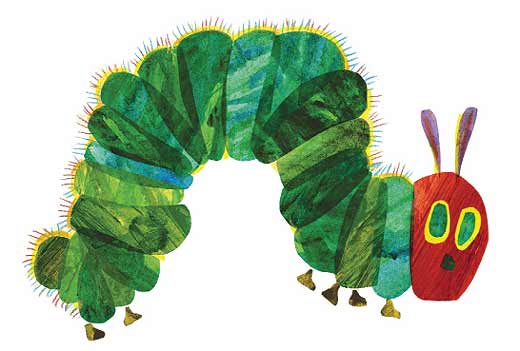
The Very Hungry Caterpillar:
Taking the Caterpillars penultimate day of eating, I have set about designing a level in which it can gorge itself on cake, salami and cheese, among other things.
As the book is for a very young audience, I have kept the game play simple. Simply make your way between the various food stuffs, in some case identifying how to get them, and chew a caterpillar sized hole through it!
While presenting this level in the style of the book is near-impossible, keeping within the realms of the story for game play is fairly easy.
(Although I’m not sure “One apple” would make much of a level, perhaps this would require a slightly different style of play.)
Spot the Dog:
Another one for a very young audience, this is one I am least happy with, and may end up on the scrap heap.
Basically, like the book, the player is presented with a scene and must find Spot and his friends hiding among it.
As f now, this has ended up as a single picture of a beach, school playground, or various other locations with characters noses and tails poking from behind scenery.
While this is like the book, it doesn’t make for good game play.

Godzilla:
An attempt to show variety, a Godzilla level is both a more adult IP and a much broarder level.
While this has not made it past the rough sketch stage, the game play takes the role of a person trying to escape a building while Godzilla is trying to find the people inside and destroying the building.
An important point to note is this is based more on the American version of Godzilla, as a rampaging monster, as opposed to the Japanese version who spends more time defending Japan from other invading monsters.
(This is keep it different from other Godzilla games available)

The Grinch:
This one is almost finished, so I’ll not spoil the surprise.
However, you’ll be stealing Christmas from the residents of Whosville!

Noddy:
Another one that may be doomed before it has started, this game would simply have Noddy driving around toy town and making deliveries.
The level design itself would simply be a drawing of toy town, and a variety of places to pick up and deliver.

Pingu:
Pingu is a tricky one, as I have been unable to indentify any potential mechanic for it.
At the moment, the concept is that Pingu has accidently led the abominable snowman to the village, and must lure him back out with a trail of fish that he must catch and position to lure it away.
Of course, the abominable snowman isn’t violent, just a little troublesome, and poor Pingu doesn’t want to get in trouble!

That’s it for now, I have a long list of other IP’s, but some of them do not work as well as others. I will try and get this lot done ASAP! Then you can have more! (Hopefully.)
Wednesday, 27 October 2010
The levels so far (..A week ago)
My lack of a reliable internet connection is seriously capping my ability to maintain a reflective diary, so people may wish to note that a blog may not be the best way forward should your router be playing silly buggers.
However:

However:
As promised, here are my 2 finished level designs. Complete with self crituqe.
First up, Batfink!

The style and presentation here leave something to be desired. While the game play works well for the series, I find that it is not particularly well presented, or even as clear as it could be.
Next up, The cat in the Hat!
I didn’t post anything about working on this, as I was trying to see if I could do it quickly. After my initial research into Dr. Seuss, I chose a section of ‘The Cat in the Hat’ that would most easily transition to game play, and presented the level in the same few colours as the illustrations in the book.
This level lacks style somewhat, while the colours help somewhat to relate it to the book, the lines and shapes are too simple, instead of having the slightly bizarre essence of the Dr. Seuss illustrations.
Whats next? Well, sticking with the Dr. Seuss theme, I hope to rectify this style issue by presenting the level in a much more stylish way.
Whats my source? Well, as the holiday season is approaching (After people stop trying to sell us pumpkins) I will be tackling “How the Grinch stole Christmas”
Wish me luck!
(As of writing this, I have designed several levels on paper, and while these have yet to transition into any sort of finished piece, I am able to quickly see if the concept works and develop it. More on this later)
Edit: I have changed the font from Times New Roman... I'm not sure why this post had it!
Sunday, 17 October 2010
A change (back) in direction
Dear Reflective Diary:
I am having trouble deciding what to do for the best. as such, I have written you a post about where I am at with my project.
Well, Pixel art is a dead end. While I know I'd do very well to continue doing this for the next 18 months, I will get nothing from it.
I'll learn nothing, and it won't help my portfolio.
So, in aid of 'Actually doing something worthwhile' I'll be returning to level design.
I stopped doing it because I had no confidence in my ability to do it, but that why I should do it!
I'll never learn if I don’t!
I'll be sure to get the last few bits of pixel art work up here, so you can see I've not been wasting time! (It did help me clear my head a bit and focus more for level design, I have a greater understanding of what I’m doing now! yay!) I'll also get my level designs so far up. One based on Batfink, and the other on 'The Cast in the Hat' which I've done since switching back to level design a few days ago.
On an unrelated note, the contextual review - Hard! May seem short, but finding journals is a pain. I'll have to go ask for help. Books are easy (Well, finding relevant ones isn't) and websites all seem so un-academic.
But that’s for the poor sap grading the contextual review to read!
Edit: Added this:
I am having trouble deciding what to do for the best. as such, I have written you a post about where I am at with my project.
Well, Pixel art is a dead end. While I know I'd do very well to continue doing this for the next 18 months, I will get nothing from it.
I'll learn nothing, and it won't help my portfolio.
So, in aid of 'Actually doing something worthwhile' I'll be returning to level design.
I stopped doing it because I had no confidence in my ability to do it, but that why I should do it!
I'll never learn if I don’t!
I'll be sure to get the last few bits of pixel art work up here, so you can see I've not been wasting time! (It did help me clear my head a bit and focus more for level design, I have a greater understanding of what I’m doing now! yay!) I'll also get my level designs so far up. One based on Batfink, and the other on 'The Cast in the Hat' which I've done since switching back to level design a few days ago.
On an unrelated note, the contextual review - Hard! May seem short, but finding journals is a pain. I'll have to go ask for help. Books are easy (Well, finding relevant ones isn't) and websites all seem so un-academic.
But that’s for the poor sap grading the contextual review to read!
Edit: Added this:


Saturday, 9 October 2010
Some direction
Looking at dong pixel art, there are several routes I could take, all of which I need to make a decision on!
So to pad out my reflective diary, here is some talk of some pixel art styles I have looked at!
Style wise, there are two main areas I’ve looked at.
One, of which I have lots of experience, is Simple Isometric.

Yup, I did that. In all its copyright infringing glory.
The other is a little more interesting. Designing specifically within limits.
An example of this would be if I where designing for the 8 bit era.
My colour pallet would be limited to the same 64 colours, I would have to work with 16x16 or 16x32 tiles for each sprite, and each could only use 3 colours (+ Transparency), also requiring a solid coloured background.
This of course doesn’t help me for the modern gaming industry. (It might be more suited if I where doing a fine art degree.)

Zelda II, an 8 bit game. Note how each item uses 3 colours
While I am still experimenting, one of my initial ideas for the first semester is to create a simple level block map, and dress it in several different styles. Perhaps even for completely different game genres?
This would go quite a way to helping with my environment design skills, teaching me to ‘dress’ a set.
Finally, there is something I would like to do, perhaps later in the course.
A fully animated scene. Here is an example created by Eboy for Christian Aid Week and aired on TV.
Side note, there is also the more classic 3 colour pixel art, or the more advanced 16 bit pixel art graphics.
Thursday, 7 October 2010
No more gateway project!
It’s done. Over, finished, never to be seen again.
The Gateway project is ‘submitted’ tomorrow, and I can forget about its bizarre meaning.
Overall, it’s archived what it is there to do, I got to know new people from different discipline, I’ve got my creative gears turning again after 4 months of very little work, and have a better understanding of what the masters is going to be like!
The main thing I’ll take away from this, however, is that group work is a pain.
Communicating is easy enough, and we had no trouble agreeing on ideas and such, but coordinating the effort when you are only really able to be together one day a week is not easy!
Thank you, modern technology!
And thank you, Gateway project, for reminding me that Game Design isn’t actually so bad.
Want to see what I came up with in the end? Here it is!
To explain why I did this, The group had agreed to show the temptations of our future, so I worked in pixel art, the area in which I’d love to go, and created UCLan’s Victoria Building, as this is MY (our?) gateway to our future careers!
(Drawing a building you can’t see the roof of from top-down perspective? Not easy. Roofs? Boring.)
The Gateway project is ‘submitted’ tomorrow, and I can forget about its bizarre meaning.
Overall, it’s archived what it is there to do, I got to know new people from different discipline, I’ve got my creative gears turning again after 4 months of very little work, and have a better understanding of what the masters is going to be like!
The main thing I’ll take away from this, however, is that group work is a pain.
Communicating is easy enough, and we had no trouble agreeing on ideas and such, but coordinating the effort when you are only really able to be together one day a week is not easy!
Thank you, modern technology!
And thank you, Gateway project, for reminding me that Game Design isn’t actually so bad.
Want to see what I came up with in the end? Here it is!

To explain why I did this, The group had agreed to show the temptations of our future, so I worked in pixel art, the area in which I’d love to go, and created UCLan’s Victoria Building, as this is MY (our?) gateway to our future careers!
(Drawing a building you can’t see the roof of from top-down perspective? Not easy. Roofs? Boring.)
Tuesday, 5 October 2010
An experiment in weather
While I’ve spent the last few years hovering around my pixel art comfort zone, the first thing I wanted to do was step quickly out of this.
As I’m doing environment design, and am quite adept at props, terrain and architecture, I thought I’d go with something I’ve not been brave enough to try.
Weather!

I’m trying to be less wordy, so I’ll leave you guys (Plural? Really? Who am I kidding?) with this for now.
As I’m doing environment design, and am quite adept at props, terrain and architecture, I thought I’d go with something I’ve not been brave enough to try.
Weather!

I’m trying to be less wordy, so I’ll leave you guys (Plural? Really? Who am I kidding?) with this for now.
Subscribe to:
Posts (Atom)